Rethinking Employee Wellness: Are We Truly Supporting Women at Work?
Are we designing workplaces for people as they really are - or as we expect them to be?
There's been a noticeable shift in how companies approach employee wellbeing. More flexible policies. More mental health support. More conversations.
And yet, when it comes to women's health, many workplaces are only just beginning to scratch the surface.
I was recently reading an article on inclusive wellbeing benefits for female employees, and it reinforced something I've been seeing more of in practice: The organisations that are truly thinking about women's health are the ones quietly rethinking how work itself needs to adapt.
When policy meets real life
A recent experience brought this into sharp focus for me.
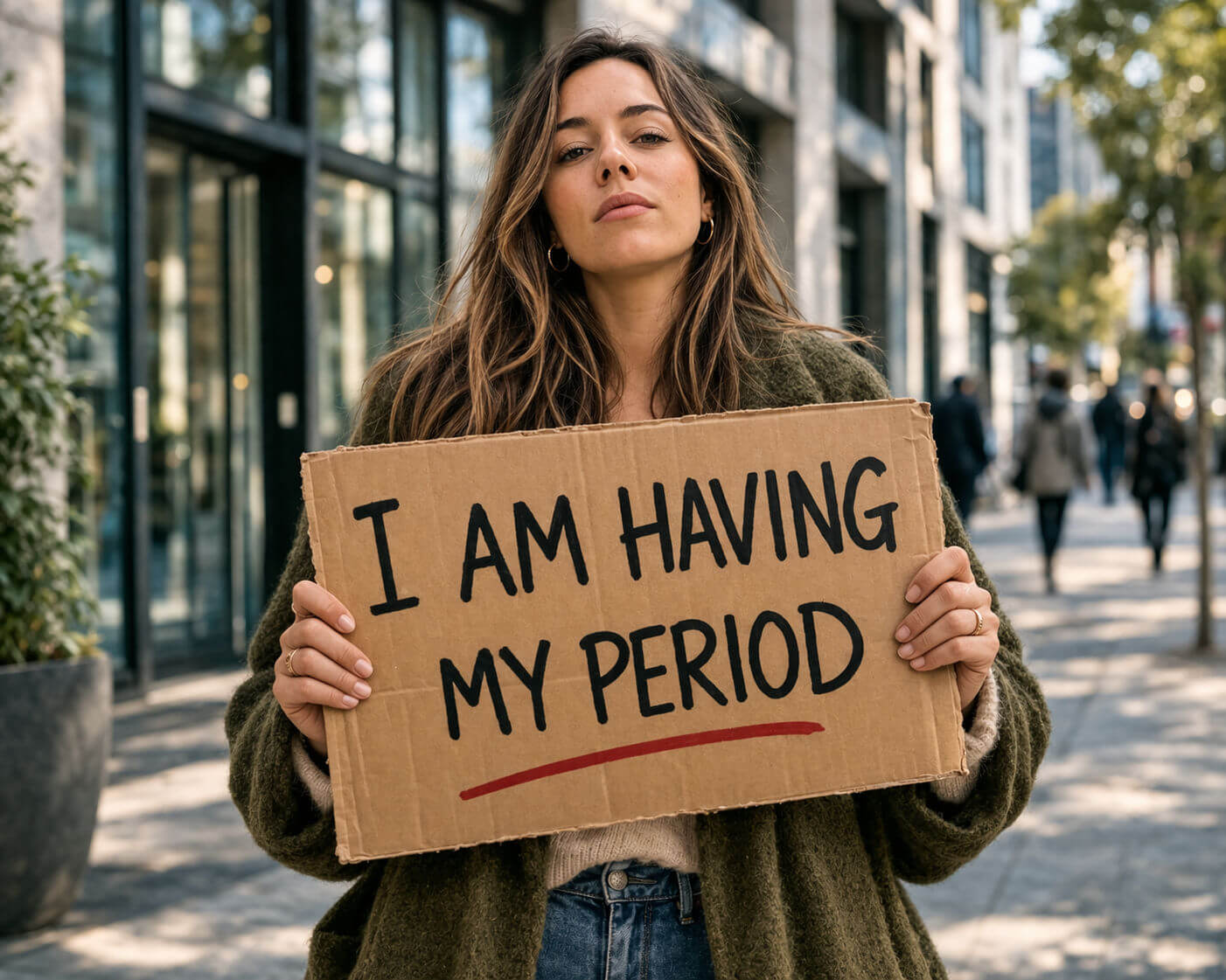
One of my clients introduced a Female Wellness Leave policy, something I found incredibly progressive. What stood out even more was that this was driven by a male founder and CEO who had taken the time to understand, through the women in his life, how deeply female health can impact day-to-day functioning.
The premise was simple but powerful: If you are unable to show up at work due to female health challenges, why should you have to "spend" your sick leave to do so?
Not long after, I came across the announcement that Canon South Africa had introduced a similar policy.
And it made me pause.
When corporates do this, it becomes a headline. But in many founder-led businesses, these decisions are being made quietly, thoughtfully, without the need for recognition.
My initial reaction (and why I changed my mind)
If I'm honest, my first reaction to female wellness leave was… hesitation.
Would I feel comfortable applying for leave that explicitly signals I'm on my period? Would it feel exposing? Even embarrassing?
I even discussed it with my husband, and we both questioned whether this kind of policy might unintentionally create discomfort.
But then something shifted for me.
Why should it be embarrassing?
Why is something so fundamentally biological, so intrinsically part of being a woman, still treated as something to hide?
We don't hesitate to take leave for a migraine. We don't feel the need to disguise a flu.
So why the silence around menstrual health or menopause?
The conversations we're still not having
There are entire phases of a woman's life that remain largely unspoken in the workplace.
Take menopause, for example.
For many women, it's not a mild inconvenience, it can be physically and emotionally overwhelming. Fatigue, brain fog, anxiety, disrupted sleep. And yet, how many workplaces actively design for this reality?
Or even earlier stages, severe menstrual pain, endometriosis, hormonal imbalances.
These are not edge cases. They are common experiences.
And still, many women feel they need to "push through" in silence.
Designing benefits that reflect real lives
This is where employee benefits - and specifically leave policies - become incredibly powerful.
Because time off is not just a policy. It's a signal.
It tells your team:
- What is acknowledged
- What is supported
- And what is still expected to be hidden
When companies introduce policies like female wellness leave, unlimited leave, or even informal "off-the-record" breaks, they are doing more than adding benefits. They are redefining what it means to be a human at work. And importantly, they are recognising that wellbeing is not one-size-fits-all.
From policy to experience
What matters just as much as what you offer, is how it is experienced.
A policy that exists on paper but feels awkward or unsafe to use doesn't solve the problem. In fact, it can reinforce it.
The real shift happens when:
- Leaders normalise these conversations
- Teams feel safe to use what's available
- And benefits are designed with empathy, not assumptions.
Where this shows up for us at MyBento
At MyBento, we sit at the intersection of employers and their employee value proposition.
And what's been encouraging is seeing just how progressive some companies are becoming.
We work with clients who are implementing:
- Female health leave
- Unlimited leave policies
- Flexible, "off-the-record" time when people need it most
These are not just perks. They are signals of trust, understanding, and modern leadership.
Our role is to make it easy for employees to actually access and manage these benefits, whether it's time off, medical aid, retirement savings, life insurance, EAP support, or reimbursement claims. All in one, payroll-integrated, self-service hub.
Because ultimately, a benefit only has value if people can use it easily - and feel comfortable doing so.
A final thought
If we are serious about employee wellbeing, we need to ask a harder question:
Are we designing workplaces for people as they really are, or as we expect them to be?
For women, that answer still has room to evolve.
But the shift is happening. And the companies leading the way are not just talking about wellbeing; they are building it into the fabric of how work works.
